Concrete Runways
A 20-page editorial magazine exploring the intersections of fashion, sports, streetwear, design, and culture.
View full magazine
Creating the Publication
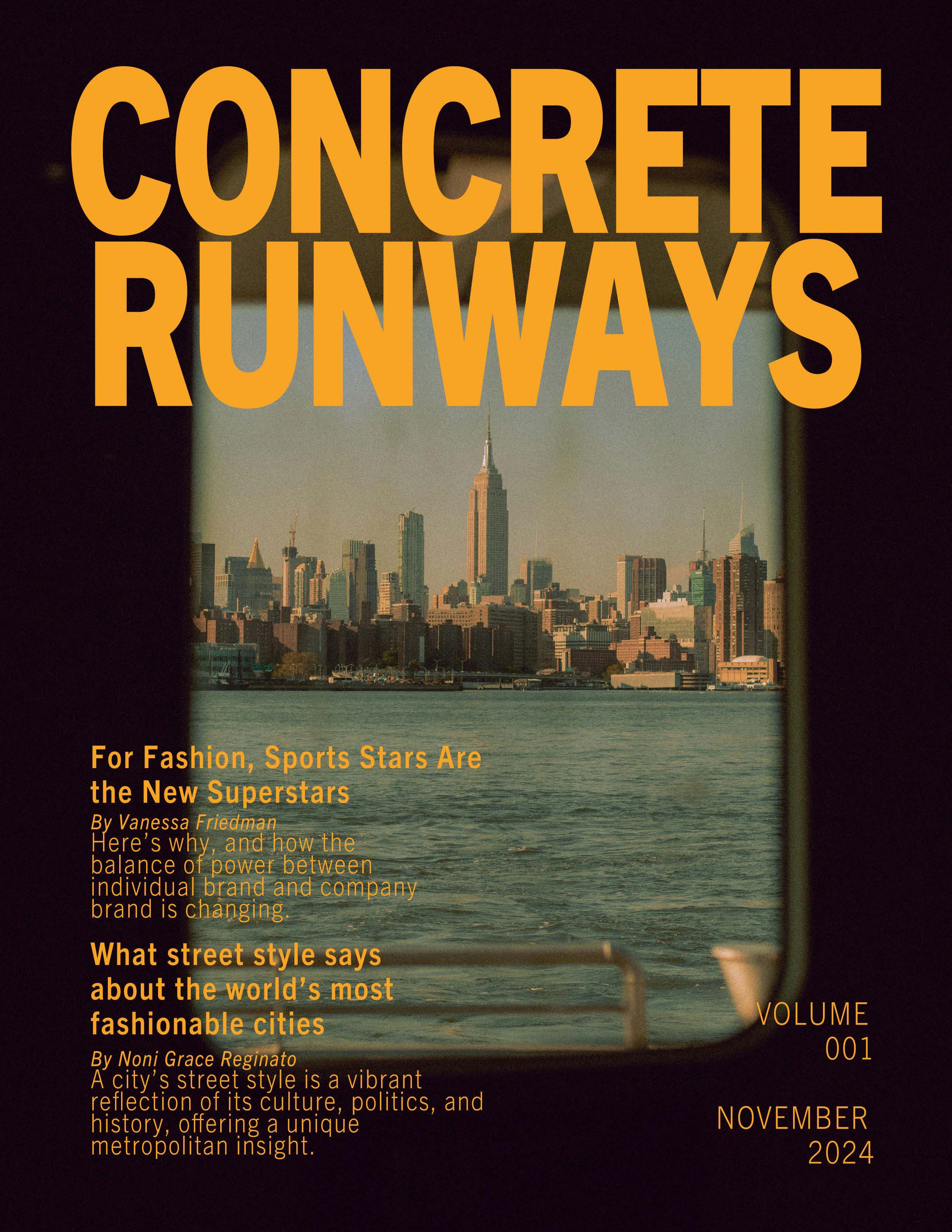
Concrete Runways was an individual editorial design project created for a graphic design course in 2024. I developed and physically produced a 20-page magazine for people interested in fashion, sports, streetwear, design, and culture.
Using Adobe InDesign and Photoshop, I created the concept, visual identity, cover, spreads, advertisements, and overall pacing. The articles and imagery were curated from existing online sources, while the art direction and design system were entirely my own.
The Editorial Concept
Fashion, sports, and streetwear have become increasingly connected, with athletes influencing style as much as performance and fashion brands becoming part of popular culture. I wanted to create a magazine that explored those intersections through an editorial lens.
The title Concrete Runways reflects that idea. It combines the energy of city streets with the sophistication of high fashion, creating a publication that feels equally inspired by luxury editorials, sports media, and street culture.

Building the Visual Identity
Every design decision was made to balance the polish of luxury fashion magazines with the energy of sports and street culture.
I explored typography, image scale, color, pacing, and white space to create a publication that felt editorial rather than academic. Large photography, bold headlines, layered compositions, and varied layouts helped each spread feel distinct while maintaining a consistent visual system across the magazine.
Using Adobe InDesign and Photoshop, I refined the sequencing page by page, adjusting layouts to create rhythm between full-bleed imagery, editorial copy, and graphic moments. The result was a publication designed to feel immersive from cover to final page.
Selected Spreads
A selection of spreads showing how the visual system shifts across fashion, sport, and culture while maintaining a consistent editorial voice.


Key Design Decisions
Typography & Hierarchy
Bold display typography paired with restrained body copy creates a clear reading rhythm while reinforcing the magazine's confident editorial voice.
Image Scale
Alternating between full-bleed photography and tighter editorial compositions creates contrast, directs attention, and gives each spread its own visual impact.
Color & Contrast
A limited color palette allows the photography to remain the focal point while bold accents provide energy and establish visual consistency throughout the publication.
Editorial Pacing
Different layouts, image densities, and whitespace create a natural rhythm from spread to spread, making the magazine feel dynamic while remaining cohesive.
Full Publication
Turn through the complete publication, from the opening cover through the back cover.
Click a side, drag or swipe, or use the left and right arrow keys.
Loading all 20 publication pages.
Reflection
Concrete Runways challenged me to think beyond creating attractive layouts. Every decision, from sequencing and typography to pacing and composition, had to support a larger editorial story. The project strengthened my ability to communicate ideas visually, balance creativity with structure, and design experiences that keep an audience engaged from beginning to end.
It also reinforced something that continues to shape my work today: strong creative work is built on intentional decisions. Whether designing a magazine, developing a brand strategy, or improving a customer experience, every detail should contribute to a cohesive story.